

Trump vs. the 'Deep State' Fed
Economy weak, Fed pushback strong...
"NOT PERMITTED under the law," snapped Jay Powell, writes Dan Amoss
in Addison Wiggin's Daily Reckoning.
The
scene was the Fed's press conference. It was the day after Donald Trump's resounding election
victory.
The
reporter, seeking confirmation, followed up. "Not per-MIT-ted under the law!" repeated a visibly
irritated Powell, slowly enunciating
the word.
Powell's body language said he's ready to battle Trump in the press.
I recount this scene to give
you a head start in identifying one of Trump's next battles in his multi-year conflict with the Deep
State.
Starting in 2017, the Deep State tried to impeach Trump, undermine his policy goals, slow-walk his
orders to the military, and ruin
the 2020 economy with COVID lockdowns.
Most controversially, it's hard to argue
that the Deep State didn't
inspire the mysterious shooter whose bullet grazed Trump's ear at a fateful July 2024 rally in Butler,
Pennsylvania. You, me, and the
entire world are wondering, "What will they do next?" By "they," I am not referring to a pre-planned
conspiracy. There is no single
evil mastermind running the Deep State – one who has anticipated every possible countermove.
No, the Deep
State is a faceless blob.
It is a group of government agencies, media outlets,
corporations, and people
inside those organizations. They understand that Trump's vision for America is disruptive to their
preferred way of doing business.
Rather than adapt to Trump's priorities, they see it as a sacred duty to resist him.
Let's return to the role
of Fed Chairman Jay Powell. Powell is trying to serve the American public as best he can, even if he's
blind to the Fed's role in
promoting wealth inequality and inflation.
Powell's policies have been too soft
on asset owners in our overly
financialized US economy. The Fed's asset-pumping policies have exacerbated the wealth gap. It eased
policy far too much with
trillions of Dollars in money printing and its tightening in 2022 and 2023 has not been nearly so
dramatic. The wealth gap, powered by
the residual money printed in 2021 and 2022, has played a key role in resurrecting Trump's
campaign.
Trump
started from a small base of loyal family members and friends on January 6, 2021, rode a tidal wave of
public discontent over rampant
Biden inflation, and won the popular vote. The remarkable rebound in support for Trump over three years
could not have happened if
most Americans were happy with the status quo under Biden.
We know where most
of the American public stands.
They are financially worn out and frustrated by the pain of cumulative inflation. Their confidence is
low, but many are hopeful that
Trump will turn things around quickly. However, turning around this economic ship will not be easy, nor
will it be
costless.
The economy is like a large ship that's been heading in a specific
direction. Even if Trump steers
it sharply in a different, more production-oriented direction, it will take time to see material
results.
Meanwhile, Biden's advisors have for years been steering the economic ship in the direction of bloated
government spending, government
jobs, and malinvestment in green energy.
I think it's important to keep this in
mind when thinking about
Trump's goals starting in 2025: There is a global imbalance between production and consumption, and it's
been growing for decades. I
support Trump's vision to reprioritize production in America. Our multi-decade trend toward
over-consuming with too many government
jobs and service jobs is unhealthy and unstable. We've done this while exporting bonds and stocks to
foreign producers to fund this
consumption.
Bonds and stocks are securities with explicit or implicit promises
to deliver streams of cash
flow. Bonds are explicit, pre-defined streams of cash flow. Stocks are implicit promises of future cash
flow in the form of
dividends.
Here's why stocks are so volatile: It's difficult – even for
diligent professionals – to estimate
how large and sustainable their dividends will be for decades into the future. In an all-too-common
example, a company that goes
bankrupt within a few years of an investor buying its stock rarely pays enough dividends for that
investor to recoup his investment in
that stock before it goes to zero.
With that context established, I'll say
this: Achieving Trump's vision to
reprioritize production in America will involve pain for an economy with an unhealthy addiction to
bubbly asset prices.
There is no easy path to revitalizing American manufacturing. Compromises will be required
either way.
The fact is, the pain from restructuring a bloated federal government means the risk of a
recession is high. And when
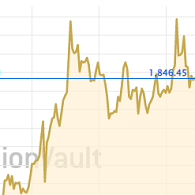
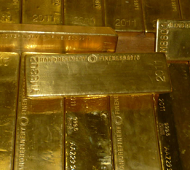
recession risks rise, the Fed slashes rates and gold typically surges higher.






 Email
us
Email
us