

Silver Deficit, Gold $2700, and the Coming Oil Glut
Reviewing H1 2024's commodity winners...
IF YOU were in charge of the Fourth of July spread this holiday, you
probably noticed a hike in prices,
says Frank Holmes at US
Global Investors.
According to the American Farm Bureau
Federation, the cost of a typical
Independence Day spread for 10 people jumped to $71.22 this year, up 5% from last year and a whopping
30% from five years
ago.
That may not seem like much, but this inflation has a compounding effect
on commodities.
Research from Goldman Sachs shows that a 1 per centage point increase in US inflation has
historically led to a real
return gain of 7 per centage points for commodities. Meanwhile, the same trigger caused stocks and bonds
to decline by 3 and 4 per
centage points, respectively.
This data supports the potential of commodities
as an inflation hedge. In times
of rising prices, having exposure to tangible assets like silver, oil and gold often retain their value
better than paper
assets.
The reason I mention silver, oil and gold is because they were the top
performing commodities in the
first half of 2024. Let's dive into what's driving these trends and what they might mean for
investors.
Leading the charge is silver, up close to 22.5% in the first half. The "poor man's gold" is proving its
worth, driven by a global
supply deficit and increasing demand.
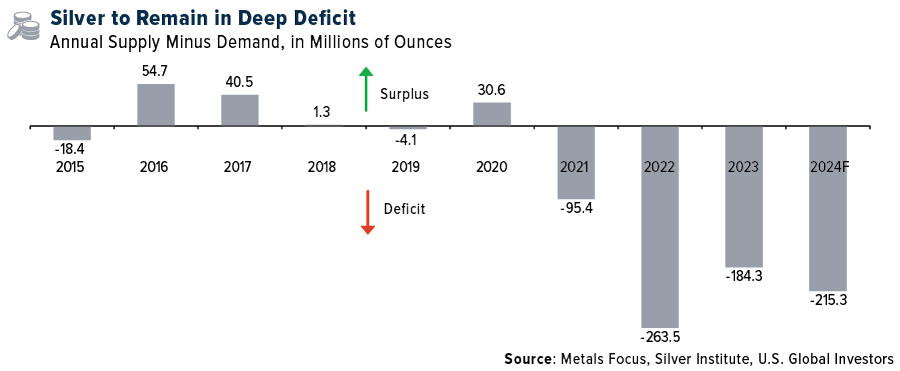
Back in
January, the Silver Institute
forecasted that global silver demand will reach a near-record 1.2 billion ounces in 2024, up 1% from
last year. This growth is
primarily fueled by industrial applications, particularly in the booming solar energy
sector.
We're looking
at the fourth consecutive year of a structural market deficit in silver. The deficit is expected to
widen by 17%, reaching 215.3
million ounces. Loyal readers should be aware of what happens when demand outstrips supply – prices tend
to rise.
Oil, our second top performer with a gain of 13.8%, continues to demonstrate its staying
power in the global economy.
Despite the push for electrification, oil demand remains robust.
According to a
new report by the
International Energy Agency (IEA), we're approaching a significant turning point. Global oil demand,
which averaged just over 102
million barrels per day in 2023, is expected to level off near 106 million barrels per day toward the
end of this decade. This plateau
in demand coincides with a projected surge in global oil production, particularly from non-OPEC+
producers.
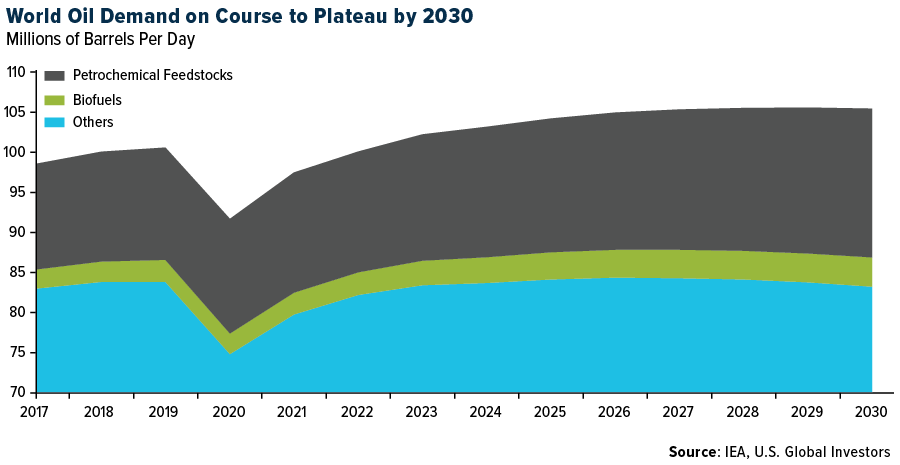
The implications
of this forecast are profound. We're looking at a future where oil supplies could reach levels of
abundance unseen outside of the
pandemic. This potential oversupply situation could exert downward pressure on oil prices.
It's worth noting
that the IEA's outlook contrasts with some other forecasts. Goldman Sachs Research, for instance,
expects oil demand to continue
growing until 2034, potentially reaching 110 million barrels a day. They cite increasing demand from
emerging Asian markets and the
petrochemical industry as key drivers.
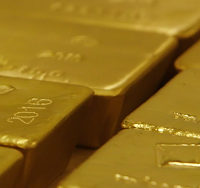
Last but certainly not least is gold.
The yellow metal has shone
brightly in 2024, rising 12.8% year-to-date and outperforming many major asset classes. This performance
is particularly impressive
given the high interest rates and strong US Dollar – conditions that ordinarily create a challenging
environment for gold.
What's behind the metal's resilience? It's a perfect storm of factors: continued central
bank buying, strong Asian
investment flows, steady consumer demand and persistent geopolitical uncertainties. In its midyear
outlook, the World Gold Council
(WGC) estimates that central bank demand alone contributed at least 10% to gold's performance in 2023
and potentially around 5% so far
this year.
Looking ahead, Goldman has set a bullish target of $2700 per troy
ounce for gold by year-end.
That's an increase of about 16% from current levels. They cite solid demand from emerging market central
banks and Asian households as
key drivers.
Many investors, myself included, appreciate gold's potential as a
hedge against both inflation
and geopolitical risks. It could provide a buffer against potential stock market volatility, especially
if trade tensions escalate.
Additionally, gold might see further upside if concerns about the US debt load increase or if there's a
shift in Federal Reserve
policy under a new administration.
As we move into the second half of 2024, the
commodities market continues
to offer intriguing opportunities. Silver's industrial demand, particularly in the green energy sector,
presents a compelling growth
story. Oil remains a critical resource, especially for emerging economies, despite the global push
towards renewables. And gold, the
eternal safe haven, continues to prove its worth in uncertain times.






 Email
us
Email
us