

Copper, Gold, Demand and Supply
Amid the green energy push, look for balance...
Two commodities have emerged as pivotal players as geopolitical tensions
have escalated, influencing
global financial markets: gold and copper, writes Frank Holmes at US Global
Investors.
These metals are not merely survivors of market
volatility but are thriving, charting
a course that I believe savvy investors would be wise to monitor.
As I've said
countless times before, gold
has long been considered a store of value in turbulent times, and now is no exception. Prices are near
all-time highs, reflecting its
enduring appeal during periods of uncertainty.
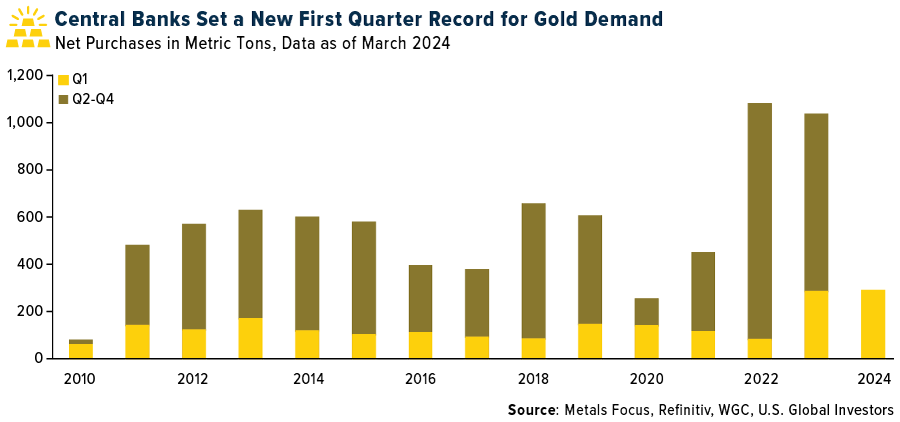
Central banks, particularly in
emerging markets, are
increasing their gold reserves. The first quarter of 2024 saw institutions purchase a record 290 tons of
gold, according to the World
Gold Council (WGC). This unprecedented amount highlights a strategic shift toward the metal as a reserve
currency and away from the US
Dollar.
While gold secures its
position as a safe haven, copper is making headlines for different reasons. Often referred to as "Dr.
Copper" for its ability to
predict economic trends due to its widespread industrial applications, copper has also seen a
significant price increase in recent
days. The industrial metal climbed to a two-year high, supported by strong global economic activity,
particularly surging demand
driven by energy transition technologies like electric vehicles (EVs), wind and solar.
The global copper
market is tightening. Production challenges, such as stoppages and declining ore grades in major South
American producers, are
anticipated to limit supply growth this year, though rebound is expected in 2025.
Despite these challenges,
the demand for copper continues to grow, fueled by its critical role in green energy solutions. The
International Copper Association
(ICA) forecasts that copper demand will increase from 28.3 million metric tons in 2020 to 40.9 million
metric tons by 2040, with a
compound annual growth rate of 1.85%.
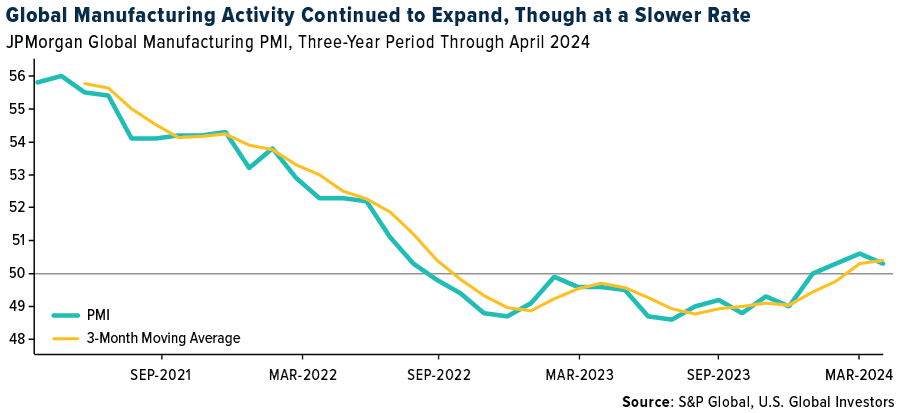
The global manufacturing sector provides
further insights. The JPMorgan
Global Manufacturing PMI saw a slight decline to 50.3 in April from a 20-month high of 50.6 in March,
but it remains above the neutral
mark, indicating expansion. This resilience in manufacturing suggests a sustained demand for industrial
metals, reinforcing the
bullish outlook for copper.
Rising input costs
and selling prices within the
manufacturing sector point to building price pressures, likely contributing to inflation concerns. Such
economic indicators are
critical for investors to consider as they assess the potential impacts on commodity prices and
investment returns.
The shift toward a low-carbon economy is not just a policy preference but a potential
investment theme. BloombergNEF
reports that global investment in the energy transition reached a staggering $1.8 trillion in 2023,
nearly doubling from 2020 levels.
Such investments, particularly in regions like Europe, the Middle East and Africa (EMEA), are expected
to drive further demand for
copper, given its essential role in electrification and renewable energy infrastructures.

For
investors, the implications of these trends are clear. Gold remains a critical asset in any diversified
portfolio, especially for
those seeking to hedge against geopolitical risk and potential inflation. Persistently strong demand
from central banks further
supports the investment case for the yellow metal. I always recommend a 10% weighting, with 5% in
physical gold (bars, coins,
jewelry), the other 5% in high-quality gold mining stocks, mutual funds and ETFs.
Not to be outdone, copper
presents a compelling growth story tied to the global economic recovery and the transition to green
energy. With the expected increase
in demand and current supply constraints, prices may continue to rise, presenting a valuable opportunity
for investors.
Past performance does not guarantee future results. All opinions expressed and data
provided are subject to change
without notice. Some of these opinions may not be appropriate to every investor. By clicking the link(s)
above, you will be directed
to a third-party website(s). US Global Investors does not endorse all information supplied by this/these
website(s) and is not.






 Email
us
Email
us