

Gold? Get Diversified!
Inflation isn't backing off as Fed expected...
DESPITE the Wall Street happy talk about the Federal Reserve winning the
battle against inflation, that
battle has not been won, writes Jim Rickards in The Daily
Reckoning.
Headline CPI (the kind Americans actually pay, not
constructs like "core" and
"super-core") was 3.1% in January, where it was in November and compared with 3.0% last
June.
In other words,
inflation is not gone and may even be on the rise with higher oil prices lately due to geopolitical
concerns. The Fed will not raise
rates, but they will not be quick to cut them given continued inflation.
Inflation has a way of sneaking up
on investors in small increments and can do a lot of damage before investors see it for what it is.
Sure, 3.1% inflation is a lot
better than 9% inflation.
But January's 3.4% inflation rate cuts the value of a
Dollar in half in 21 years
and half again in another 21 years. That's a 75% Dollar devaluation in just 42 years or the course of a
typical career from age 23 to
age 65.
That's one of the main reasons I recommend gold. Gold is priced in
Dollars. Inflation means the
Dollar is worth less in terms of purchasing power. That means it takes more Dollars to buy gold, so the
Dollar price of gold goes
up.
What you may lose in the rest of your portfolio in terms of Dollar
purchasing power is made up in part or
all from the profits you make on the higher Dollar price of gold. Owning gold will protect you from the
ravages of inflation. You'll
have your inflation protection in place 24/7 and won't be caught off-guard.
Geopolitical conflicts and
political turmoil often result in unforeseen consequences. These consequences can include supply chain
disruptions, economic
sanctions, asset seizures and freezes, bond defaults, bank failures and inflation. Oil prices can spike
if key waterways are closed,
or a vessel is sunk.
Economic sanctions and financial warfare can cause
recession or a banking crisis almost
overnight. Assets such as stocks, bonds, real estate and alternative investments can be adversely
affected by such changes without
warning.
Gold tends to be insulated from such shocks because there is no
issuer, no creditor and no country
involved. It's just gold. That means you can hold it safely and wait out the turmoil without adverse
effects.
Gold prices do not correlate closely to stock prices. Gold and stocks are driven by separate factors.
That makes gold a good
diversification asset for portfolios that are heavily in stocks. When a portfolio is highly diversified,
it can produce higher
expected returns without adding risk.
The difficult part is finding asset
classes that really are
diversified. Buying 50 different stocks is not diversification since you only have one asset class –
stocks – and the behavior of
various shares will be highly correlated in times of stress. Gold is genuinely diversified from stocks
and will improve portfolio
returns.
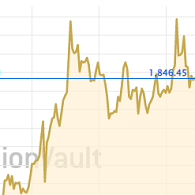
Gold prices have been trending higher lately with some volatility
along the way. These trends toward
higher prices have been driven by lower interest rates; continued inflation; geopolitical concerns about
the Middle East; and
continued buying by central banks, especially Russia and China.
All those
trends will continue. One of the
principal drivers of the gold price rally is the steep decline in interest rates in recent months. The
interest rate (expressed as a
yield-to-maturity) on the 10-year US Treasury note plunged from around 5.0% to 4.0% in a matter of weeks
at the end of
2023.
Don't mistake a 1.0% move for something small. That's an earthquake in
bond markets, especially in such
a short period of time (47 days). A 1.0% move in that short a period of time has only happened in the
Treasury market six times in the
past 30 years.
Rates have backed up slightly in the past month, but that's to
be expected. Nothing moves in a
straight line. The decline in rates will resume in the months ahead as the US economy moves into
disinflation and recession. That will
give a boost to the Dollar price of gold since notes and gold compete for investor allocations. Lower
interest rates generally make
gold relatively more attractive since gold has no yield.
Meanwhile, Russia and
China and other central banks
have been adding to their gold reserves consistently since 2008. Total gold reserves have increased from
about 600 metric tonnes to
3,000 tonnes in Russia, and over 2,000 tonnes in China (although there is good reason to believe that
China's gold reserves are much
higher, perhaps double the official figures or more).
That increase in gold
holdings will continue and
probably accelerate as the US threatens to seize Russian reserves in the form of Treasury securities and
as progress is made on the
new BRICS gold-linked currency.
Every investor should have an allocation to
gold in her portfolio. It's an
excellent diversification and can be a powerful asset to have in the face of natural disaster,
infrastructure collapse or social
unrest.
I recommend a 10% allocation of investable assets to gold. In
calculating investable assets, you
should exclude home equity and the value of any private business. Don't gamble with your house and
livelihood.
Whatever is left (stocks, bonds, real estate, alternatives) are your investible assets.
Allocate 10% of that amount to
gold. That allocation is high enough that you'll make significant profits (and protect against losses in
the rest of your portfolio)
if gold soars, but small enough that your overall portfolio won't be hurt badly if gold goes
down.
I believe
a 10% allocation is the sweet spot for both profits and downside protection. The bottom line is gold is
like an anchor for the rest of
a diversified portfolio.
Gold is physical so it is not easily frozen by
government fiat. It offers
diversification because it does not correlate to other asset performance (except Treasury notes on
occasion). It is the best hedge
against inflation.
Gold should not dominate any portfolio, but it should be
part of every portfolio.





 Email
us
Email
us