
The Fed's Critical Transition
No longer raising, set to cut...
The FED RATE remained unchanged as a result of the FOMC meeting last
week. But what's the future look
like? asks Jim Rickards in The Daily
Reckoning.
Today, I'll explain what happened in terms of policy
moves, what Fed Chair Jay Powell
believes will happen next and what will actually happen.
The difference between
Powell's expectations and
market expectations creates opportunities for investors to profit from those competing
forecasts.
Whether we
see the Dow plummet over the next few months, or a weakening economy with a recession imminent, you've
got a front-row seat to
research, strategies and recommendations that can help you weather the storm and profit.
Last week the Fed
kept the fed funds rate unchanged. At the same time, they leaned in a more dovish direction with regard
to their next policy move,
while warning that rate hikes are still on the table in certain circumstances.
It's important to look at the
Fed's reasoning behind its moves and to consider what's next both for the Fed and the US
economy.
Fed Chair
Jay Powell's press conference following the announcement is always more informative than the official
announcement and this meeting
was no exception. Powell's insistence on flexibility going forward is obvious.
As has been the case since
last summer, Powell is caught on the horns of a dilemma. On the one hand, inflation remains too
high.
On the
other hand, if Powell raises rates or simply holds them too high for too long, the inflation could turn
to rapid disinflation or even
deflation accompanied by a recession.
Powell understands the dilemma, but he
does not know which way to turn.
His solution is to do nothing and wait for more data.
That said, the meeting
was highly significant in the
sense that the FOMC statement and Powell's remarks were dovish. The Fed turned from a possible rate hike
to a possible rate cut as
their next move. Nothing was set in stone and no clues were given as to timing, but the tilt toward
easing instead of more tightening
was unmistakable.
Of course, Powell tried to have it both ways. He said,
"Inflation has eased from its
highs...without a significant increase in unemployment." In the next breath he said, "Inflation is still
too high." The way to
reconcile these statements is to understand that while inflation may be too high, interest rates may be
high enough to combat the
inflation without further rate hikes.
That's the definition of the "terminal
rate" and that's where Jay
Powell believes the Fed is right now.
Specifically, Powell said rates are,
"likely at or near the peak rate
for this cycle," and "the full effects of our tightening likely have not yet been felt." That's another
way of saying we're at the
terminal rate.
As if to hammer the point home, Powell said, a rate hike "is not
the base case anymore as it
was 60, 90 days ago."
Powell left a few markers that rate hikes might still be
needed if the economy does not
play out as expected. He said, "We still have a ways to go. No one is declaring victory. That would be
premature." He added that wages
are running higher than what would be consistent with the policy goal.
That's a
sign that demand-driven
inflation could be on the horizon in place of supply-side inflation, which is waning. To keep his
options open, Powell went on to say,
"We will need to see further evidence...that inflation is moving down sustainably toward our goal," and,
"We are prepared to tighten
policy further if appropriate."
One of Powell's more intriguing comments was
that the Fed would cut rates
before inflation hits the 2.0% target. The idea is that if inflation falls from 3.2% to, say, 2.5%, the
Fed might cut rates at that
stage.
The view is that with inflation falling quickly, it could overshoot the
2.0% target and end up at 1.0%
or lower. That's a reason to cut rates when inflation is still 2.5% and then watch inflation glide
smoothly to the 2.0%
target.
All of this gives the Fed too much credit for finesse. They're not as
nimble as this analysis makes
them sound. But the remarks do give insight into their thinking, which will help with forecasting in the
future.
Powell also wrestled with an arcane point raised by a reporter. If inflation falls faster
than nominal rates, that means
real rates are going up. The real rate is simply the nominal rate minus inflation.
If nominal rates are stuck
at 5.5% and inflation drops from 3.2% to 2.5%, then the real rate went up from 2.3% to 3.0%. That's a
different form of tightening but
one which could cause the Fed to cut rates quickly if inflation falls quickly.
Powell also reminded reporters
that "We're not talking about altering the pace of QT right now." QT is quantitative tightening, another
form of monetary tightening.
So even without interest rate hikes, the Fed is still running a tight money policy.
Powell took a nod in the
direction of a recession when he said, "Maybe people bought so much stuff that they temporarily don't
want any more stuff." That's a
reference to a recent slowdown in consumer spending.
Markets loved the dovish
tilt despite the nuance about
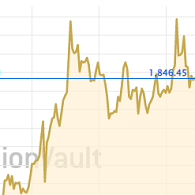
real rates and recession. Stock indexes rose about 1.4% to new all-time highs. Gold rallied 2.5% to
$2045 per ounce. The yield on the
10-year Treasury note plunged from 4.2% to 3.9%, producing huge capital gains in Treasury
notes.
Even oil
futures rose to $74.50 per barrel up from $69.00 earlier in the day. We'll see how long the optimism
lasts, especially in the face of
recessionary signs. For now, markets want to party like it's 1999.
On the
whole, last week's meeting was
important considering that the Fed didn't actually do anything.
The tilt away
from hawkishness toward
dovishness was critical. It triggered rallies in stocks, bonds and gold – what some traders call an
"everything rally".
The next Fed meeting is Jan. 30-31, 2024. A lot will happen between now and then including
more data on inflation,
unemployment and economic growth that will affect the Fed's decision-making process.
I'll be watching all of
it carefully and bringing you the latest analysis as events unfold.




 Email
us
Email
us