

Trump at 100 Days, Gold at $3300
A history of debasement at the federal troughs...
TIME flies. We're already past the 100th day of President Trump's second
term, writes Byron King in
The Daily
Reckoning.
One piece of good news is that America's southern border is as secure as it's ever been in
modern times. Trump and his
people fixed that wide-open, Biden-era problem quite fast, by the novel approach of applying existing
law. Amazing! Who
knew?
Now the country doesn't have to deal with 10-15,000 new arrivals every
day, unknown, un-vetted people
from all over the planet who just walk in and immediately become a burden on the country's broken
budget.
On
the other side of the political ledger, the economy is weakening, something we predicted in articles
going back deep into 2024. And
many federal judges have decided to wage lawfare on the 47th President, itching for a so-called
"Constitutional crisis" that they will
blame on Trump.
Overseas, international tensions remain high; Eastern Europe,
Middle East and East Asia all
speak for themselves. There's nothing easy about any of those problems, and they cost money that the
country can ill-afford just
now.
All this, and last week the price of gold hit $3500 per ounce before
receding to the low-$3300s price
range. So gold is moving; but will it head upwards or is a pullback in the cards?
In this note, let's discuss
Trump and gold, but mostly gold.
On 20 January, when Donald Trump took his oath
of office, the gold price was
$2725 per ounce. Now, after 100 days it's about $3325, an upward move of 22%.
Correlation is not causation,
as I learned many years ago in statistics class, but Trump still owns some of that move.
Let's time-travel a
decade ago to mid-2015 when the New York businessman dove into national politics and announced his run
for the presidency. Back then,
the price of gold was just shy of $1200 per ounce. And over the past 10 years gold has moved up by about
177%.
Of course, Trump alone doesn't move the price of gold. Sure, he was President for four
years, 2017-21. Then, he was not
President for four years; and in fact, from 2021-25 he spent much of his time as a professional
defendant in multiple court
cases.
Now he's back in the Oval Office at the three-plus month marker. But
c'mon, man...all sorts of things
move gold prices.
In this regard, it's more accurate to say that the price of
gold reflects global-scale
perceptions of the inherent (and declining) value and utility of US Dollars; and yes, Trump definitely
sways perceptions.
That is, if world markets perceive that the US economy is strong and things look good for
the future of America, then
gold prices tend to moderate; they find a range. But if markets sense weakness in the US or its economic
future, then the price of
gold rises.
Again, Trump plays a big role in all of this, but he's only one
factor among many.
To help understand the moves in gold prices, let's do a quick (I promise) history lesson.
We'll start in 1914, with a
standard $20 coin called a "St. Gaudens", named after the designer.
This coin
had a bit less than one ounce
of gold in it (30.093 grams to be exact), along with a small measure of copper to harden the alloy. When
it was minted 111 years ago,
this item was worth a face value of $20, and the gold was also worth $20. In other words, and to channel
the ghost of long-deceased
tycoon J.P.Morgan, "gold was money" back then, and twenty Dollars bought an ounce of gold.
If you're
wondering why I chose 1914, it's because that was the first year of the US Federal Reserve, meaning
America's central bank. President
Wilson signed the Federal Reserve Act on 23 December 1913, literally in the dead of night, during a
holiday period in a nearly empty
Washington D.C., which tells you much about how the Fed came into being.
Then
as 1914 unfolded, and in one of
the Fed's first official acts, it issued so-called "notes" among which some were valued at
$20.
The note
specifically stated: "The United States of America will pay to the bearer on demand Twenty Dollars."
Meaning yes, you could take this
to a bank and exchange the paper for a gold coin.
Today, you might be forgiven
to think that the note itself
is itself $20. But no, that's not the case; that 111-year-old item is definitely not $20, it's just a
promise. Again, that's because
long ago, "twenty Dollars" meant an ounce of gold, ideally stamped into the shape of a coin.
To nail the
point, in 1914 gold was real money; paper notes were just promises, even those issued by the Fed. That's
even if, as in the case
above, the US government was the promisor who guaranteed payment in gold.
Which
brings us back to last
month's gold price rise, up above the $3500 line, and then the subsequent pullback to the current level
around $3325.
Do the math. At $3325, you now need over 166 Federal Reserve $20 bills – like those that
you get from the local ATM
machine – to buy an ounce of gold; and that's just the gold, not allowing for any numismatic value to an
old, rare coin.
Look at it this way; over the past 111 years, the Dollar has shrunk in purchasing power and
its ability to preserve
wealth by a factor of 166. Or stated in another way, a penny from that 1914 era is now worth
$1.66.
The
value-loss of the past century had nearly nothing to do with President Trump. Indeed, for that decline
in the Dollar's value we can
thank many Presidents: Wilson, Harding, Coolidge, Hoover, Roosevelt (Franklin), Truman, Eisenhower,
Kennedy, Johnson, Nixon, Ford,
Carter, Reagan, Bush (H.W.), Clinton, Bush (W.), Obama, Trump (first term), Biden...and now Trump 2.0 at
his 100 day mark.
Generation after generation, President after President, the US government routinely engaged
in deficit spending. This is
certainly the case since 1971, after President Nixon essentially tore up the World War II-era Bretton
Woods agreement which kept the
Dollar tied to the value of gold. Since then, federal spending, deficits and the national debt have
mushroomed.
Now the nation owes unpayable levels of national debt, around $37 trillion. That, plus
something approaching $2 trillion
in interest due every year, a sum which cleans out most of the cash in the Treasury's accounts. And it's
axiomatic that the annual
federal deficit is paid with borrowed funds, including what gets paid as interest on past debt. All in
all, our national accounting
scheme is a highway to ruin.
To compound the matter, current American culture
doesn't seem to know what to do
with itself absent massive federal spending, particularly deficit spending which is sewn into the social
fabric of the
country.
For many decades, Congress has been institutionally incapable of
cutting the budget. Politically,
there are few accounting priorities in Washington; they fund just about everything. And we almost never
program terminations except
for a few of the most grievous military procurement boondoggles.
More recently
– the past 100 days – we've
witnessed the nation's collective inability to deal with spending cuts. Consider the apoplectic,
psychotic reactions in many quarters
to federal spending freezes and shutdowns. Or to state it another way, we hear the sound of rice bowls
being broken.
For example, we have Trump's Department of Government Efficiency (DOGE), which in just
three months has torn through one
federal agency after another. DOGE cut budgets, laid off staff, closed offices and more. And
predictably, the mainstream media went
nuts while people across the Republic went to court, seeking a friendly federal judge to issue an order
blocking the President from
not spending money that, at root, the country doesn't have.
Did Trump cut too
many things, too much, too
fast? Hey, argue it any way you want because it depends on what's in your rice bowl. Does America need
most of what, say, US Agency
for International Development (USAID) was doing? Does the country need the Department of Education? And
so on; there's a long list and
no need to detail it here.
Then again, at an even higher plane, can Trump ever
begin to "cut" enough spending
to save the financially foundering ship of state? So far, Trump has eliminated perhaps $200 billion in
federal expenditures, but the
number ought to be ten times that size. Good luck, right?
The problem is that
for better or worse, every
federal Dollar is someone's income. So when federal spending declines, it's money no longer in someone
else's pocket. It's no wonder
that house sales are down, airlines are selling fewer tickets, hotels are booking fewer rooms, auto
dealers are selling fewer cars,
and so on.
Whether Trump is President or not, the fact is that the country is
painted into a fiscal and
monetary corner. There's too much debt and interest, and not enough cash to pay for it absent inflating
the currency. Sure, Captain
Trump has rearranged some deck chairs on the Titanic, but the ship is still sinking based on a century
of federal policy and
misallocation of the country's resources. Face it, there's no nice, clean, easy, pretty way to fix
what's broken.
Now, here's one final point, which is that gold is slowly remonetizing. The world is moving
towards a revised gold
standard, and away from American petroDollars of the past half century. Yes, it's happening under Trump
but this trend was happening
in any event, Trump or not.
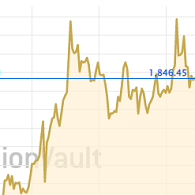
Start with the gold price over the past 5 years. On
the chart, you'll notice the
upward trend in gold prices that began in mid-2022 during the Biden administration; in fact, it occurred
not long after the US
government seized and froze massive amounts of Russian sovereign wealth, at the time locked up in
Treasury bonds. That is, the US
weaponized its currency, its banking system, and even its underlying basis of government
finance.
In
response, the world reacted as one might imagine; central banks bought gold, the price of which has
moved from $1750 to the recent
$3500 level, a double in under three years. And don't be misled, it was central banks that bought large
blocks of metal. Gold's big
move was not due to retail buyers down at the coin shops, nor hedge funds, banks, family offices,
etc.
For
three years, central banks unloaded Dollars and derisked their long-term holdings. This reflects their
collectively negative future
perceptions of the US, its economy and strength. Frankly, it doesn't matter that Trump is now President.
Central banks were buying
gold in 2022 when Trump was battling state and federal prosecutors who wanted to toss him into
jail.
That is,
Trump had nothing to do with what kicked off the 2022 upward move in gold prices, a rising tide on which
we're now floating. Yes,
Trump's recent on-again, off-again tariff policies have created confusion. His budget and spending
priorities are still in formation.
But that's not what elevated gold to $3500 last month.
Gold didn't spike up
because the metal is somehow
shinier or denser, or because the future of the US economy looks brilliant. Gold moved up along trend
lines that are three years in
the making.
The bottom line is that many people who control vast amounts of
wealth realize that America's
fiscal and monetary house is totally dysfunctional and unsustainable. The US budget is broken, the
national debt is unpayable, the
interest will kill the Treasury account.
Will gold keep going up? Yes, of
course, it's hard to see why not.
Own gold or you'll live to regret it.
Sure, expect pullbacks along the way,
certainly during market
sell-downs and especially if/when there's a crash. We may again see gold under $3000, but not for long.
Some things are bigger than
one President and his term in office. The US is over a century getting into the current mess, and we'll
be many decades digging out.
You had better own some gold as it all plays out.






 Email
us
Email
us