

Sterling's Post-Imperial Warning for the Dollar
BRICS currency forecast redux...
YOU'VE probably heard that the US economy is heavily 'financialized'
writes Jim Rickards in The Daily Reckoning.
What does that really mean? What is financialization?
It's a big topic and not
very well defined. It can
refer to the dominance of financial activity over traditional business activity in goods and services.
It can refer to market bubbles.
It can refer to the use of financial instruments in non-traditional arenas such as warfare or political
witch hunts.
In fact, it refers to all the above and more. Investors need to understand financialization
in order not to be blindsided
by market activity that defies fundamental analysis.
We can begin our review of
financialization with a look
at the role of the US Dollar in global transactions.
This is not a technical
article detailing the plumbing
of the financial system. But in considering the role of currencies in global finance, it's important to
distinguish between reserves
(basically a nation's savings account) and payments (transactions, trade, etc.).
The denomination of global
reserves today is approximately 58% US Dollars and 20% Euros. The remaining 22% is divided among Yen
(6%), Sterling (5%), Canadian
Dollars (2.5%) and other currencies are each less than 2% (AUD, CNY, CHF).
In
payments (measured in SWIFT
message traffic), the US Dollar is about 59% of payments, with the Euro at 13%, Yen at 6%, Sterling at
5% and Yuan and CAD at about 3%
each. All other currencies are less than 3% each.
The relatively larger role of
the Dollar in payments is due
to higher oil prices and oil being denominated in Dollars. SWIFT message traffic is almost exclusively
interbank payments among large
banks. There are many bilateral payments (for example, Russian payments to India in local currencies)
that do not go via
SWIFT.
There is no immediate threat to the role of the US Dollar in either
reserves or payments. I recently
debunked the fake news that Saudi Arabia has just ended the petro-Dollar deal that's been in place since
1974.
Instead there's a slow, steady erosion in the role of the Dollar that could accelerate in
the future. A good case study
is the decline of Sterling. In 1914, it was the dominant reserve and trade currency. By 1944, it had
largely been displaced by the US
Dollar as a result of Bretton Woods.
Today, Sterling is barely a footnote in
global reserves and payments.
Still, that decline took 30 years (1914-1944) and continued for another 80 years (1944-2024). Major
currencies don't simply disappear
overnight, but they are subject to these types of declines and gradual displacement by
alternatives.
Contrary
to what you hear from a lot of fringe analysts, the Russian Ruble and Chinese Yuan will not displace the
US Dollar. Neither currency
is widely accepted outside its home country. Those currencies have limited uses and lack large liquid
bond markets, and their source
countries lack a rule of law. Notions of a 'gold-backed Yuan' are nonsense. China simply doesn't have
enough gold.
A BRICS currency is a more likely alternative to the Dollar for global payments. It won't
be issued for several more
years. The BRICS are currently expanding their membership and will expand it further at their summit in
Kazan, Russia in
October.
That's critical because a larger membership increases the trading zone
where the currency can be
used. Non-BRICS members can also agree to accept the new BRICS currency if they wish.
If you receive the
BRICS currency in trade, it's more useful if you can spend it or invest it in 20 or 30 other countries
rather than just one trading
partner as is the case with Rubles, Yuan and Rupees.
This process of expanding
the currency zone with new
members will take a few more years, but the infrastructure is being put in place now. The development of
the Euro (which took eight
years from the 1992 Maastricht Treaty to launch in 2000) is a good model for this.
While a BRICS currency
will be used in trade in a few years, it will take longer to develop as a reserve currency. That
requires the creation of a large,
liquid bond market, which takes a legal code, issuers, dealers, settlement channels, hedging tools and
much more. That process can
take 10 years or longer.
What we should expect is not a sudden collapse of the
US Dollar and the US Treasury
market in payments and reserves, but rather a slow, steady diminution in the role of the Dollar similar
to what happened with Sterling
after World War I.
In the short run, the main alternative to the US Dollar in
reserve positions is not
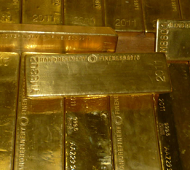
another currency, but gold. Central banks have been net purchasers of gold since 2010, reversing their
status as net sellers that had
prevailed since 1970.
These net purchases of gold are reflected in increases in
gold as a percentage of total
reserves. Gold now represents over 70% of US reserves, 25% of Russian reserves and 8% of Chinese
reserves.
Curiously, gold isn't even reported in the IMF's official reserve asset reports, despite the fact that
the IMF itself owns over 1,000
metric tonnes of gold. Gold has the added attraction of being a physical, non-digital asset that cannot
be frozen or seized by the
United States.
The most conspicuous example of financialization is the use of
financial sanctions in warfare.
This might better be called the weaponization of the Dollar. US sanctions against Russia have failed
badly (as I predicted in 2022) to
the point that the Russian economy is now outperforming the US economy by every important metric. The US
hasn't learned its lesson and
is moving to more dangerous methods.
The US froze Russian assets (about $300
billion in US Treasury
securities) at the start of the war in Ukraine. Now the US is moving to steal those assets. This plan
was recently unveiled on June 13
at the G7 summit in Apulia, Italy.
Russia will retaliate by seizing over $300
billion of Western assets still
in Russia. Since the Russian assets are mostly in custody at Euroclear (about $200 billion), Russia can
sue Euroclear for wrongful
conversion in Russia-friendly jurisdictions where Euroclear has offices including Dubai and Hong
Kong.
Euroclear has about $40 trillion in assets under custody. With a court judgment in hand, Russia could
proceed to freeze and seize
Euroclear assets on a global basis. This could throw the global financial system into complete
chaos.
Financialization in its many forms is no longer a sideshow. It has become the main event in many arenas.
Investors need to follow
developments closely in order not to get caught in the political and military crossfire.
You need to take
cover.





 Email
us
Email
us