

Hey, Loser! How to Win at Investing
Diversification as portfolio protection...
A QUESTION for you, says Tim Price at Price Value
Partners.
In the context of your savings and investments, do you want to be a winner, or do you want
to avoid being a
loser?
An awful lot hangs on your response.
Peter
Bernstein's book 'Against the
Gods' is not just recommended but compulsory reading for investors who are interested in the broader
history of risk.
One of the defining moments of our career was stumbling on the advice offered within it by
the 'Renaissance Man' polymath
Daniel Bernoulli. Bernoulli offered the following counsel to those involved in managing the wealth of
others:
"The practical utility of any gain in portfolio value inversely relates to the size of the
portfolio."
In
other words, as a general rule, the more people have, the less they need by way of subsequent return. Or
to put it another way, in
terms that have been validated by the work of Nobel laureates after Bernoulli, wealthy people should be
more concerned with capital
preservation – in real terms, of course – than with future capital growth.
'Wealthy' is clearly a somewhat
subjective term, but we can all relate to the concept of keeping what you have versus putting all of it
at risk. This capital
preservation approach is all the more important when it relates to those investors who no longer receive
regular income by way of paid
employment. That is to say, it's especially relevant for retirees and pensioners, who have pots of
sacred assets that simply cannot be
replaced.
One of the reasons that Bernoulli's advice made such an impact on us
was that we came across it
during the first dotcom bubble, i.e. the period in the late 1990s through to early 2000 and the Nasdaq
bust. At the time, everybody
seemed to be amassing huge wealth, quickly, through the ownership of speculative internet stocks. In the
words of Lord
Overstone,
"No warning on Earth can save people determined to grow suddenly
rich."
We suspect that you can pretty much boil the entire stock market down into two fundamental types of
participants: those who want to
beat the market (or who at least express their performance in market-relative terms) and those, like
ourselves, who want to generate a
decent absolute return but who don't want to share in the market's inevitable drawdowns at a ratio of
1:1 when they occur.
In other words, our own investment objective is to try and secure as much of the upside
potential available through the
stock market whilst at the same time trying to protect the downside as far as practicable.
The problem with
the aspiration to 'win at all costs' (i.e. to beat the market by a meaningful margin) is two-fold.
Firstly, it's extraordinarily
difficult (though not impossible – Warren Buffett, Benjamin Graham and the Superinvestors of Graham and
Doddsville did actually
exist); secondly, you have to accept that in trying to beat the market, by taking more risk than the
market, you also run the risk of
losing more than the market when things go south.
That's not a risk we're
willing to take with our own money,
and it's not a risk we're willing to take, at least consciously, with that of our clients.
How bad can
underperformance relative to the market be? Consider the drawdown incurred by US equity investors who
owned the market in the form of
the Dow Jones Industrial Average after the Great Crash of 1929.
In the first
instance, the drawdown they
suffered between 1929 and 1932 equated to one of 89%. Secondly, US equity investors who owned "the
market" at its peak in 1929 weren't
made whole again in real terms until 1954. They had to wait 26 years just to get their money back –
assuming that they didn't panic
and sell out in desperation at the low, which many of them likely did.
If this
sounds bad, and it clearly is,
now consider how expensive the US stock market is today.

Robert Shiller's
cyclically adjusted (i.e.
smoothed over the course of a prior decade to take account of the vagaries of the volatility in
short-term corporate earnings) price /
earnings ratio for the S&P 500 index – more representative of the entire US economy than that of the
30-stock Dow – now stands at
roughly 37 times, or more expensive than it was in 1929 and only lower than its prevailing level during
the first dotcom
bubble.
Its long run average for the past 150 years is roughly 17 times. We are
at more than twice that level
today.
The late 1990s showed us that the Shiller p/e can remain unnaturally
elevated for a while. And we're
not in denial about the 'new economy' and the capital-light model that can be exploited in some cases to
achieve global scale quickly
by digital businesses (though it turns out AI is fantastically and expensively
energy-intensive).
Our point
is somewhat subtler: We don't think that human nature quickly changes. And we believe in reversion to
the mean.
Interest rates have started to rise over the past couple of years after three-and-a-half
decades of trending down towards
zero. Most fund managers have never experienced a higher interest rate cycle.
So we make no apology for
focusing on a 'safety first' approach towards managing your investments. Our focus is and will always be
on capital preservation as
much as on future capital growth, and we define capital preservation as primarily a focus on defensive
value with some form of margin
of safety.
You can try and be a winner, and put a significant part of your
savings pot at risk. Or you can
try not to be a loser, and focus on an absolute return (cash-plus or inflation-plus) objective
instead.
Our
thesis is that over the long run, by avoiding the big drawdowns consistent with market-relative
investing, we may well end up beating
the market anyway – by preserving more capital during the downturns than index-relative investors do. It
then becomes a matter of
compounding at an overall higher rate, because we manage to avoid some of the wrenching and inevitable
losses that occur during bear
markets, and from which it can be sometimes very difficult ever to recover. The post-1929 experience
being a case in
point.
There are some specific aspects to our 'not losing' thesis. One is that
a properly diversified
investment portfolio in 2024 should include 'value' equities (shares in cheap but high quality listed
businesses); systematic
trend-following funds (uncorrelated to stock and bond markets); and real assets, notably the monetary
metals, gold and silver, and
related investments trading, again, cheaply versus their historic range.
Why
'value' equities?
Because common stocks have, over the last two centuries, been one of the best-performing
assets to own, at least in the
context of the US and UK markets. Other regions haven't been so lucky. The refinement is then to
concentrate primarily on 'value'
stocks – i.e. shares of high quality businesses run by principled, shareholder-friendly management with
a track record of generating
strong shareholder returns, but only when those shares can be bought at a meaningful discount to their
inherent value.
Why systematic trend-following funds? The investment world has got more risky, not less,
since the Global Financial
Crisis. Global politics are a mess, and a rising interest rate cycle will play merry hell with
traditional portfolios, and not least
with bonds. Managers pursuing an unconstrained (long and short) diversified trading thesis will be more
appropriate than plodding
index-trackers. The time to use index-trackers will be after the next major correction, when markets are
once again objectively
cheap.
Why 'real assets' and the monetary metals? Because we believe in sound
money. Gold and silver have
always been "money good" – nobody has ever been forced to use them as money; their use arose
spontaneously in free markets and
economies over thousands of years. Governments today have to use the rule of law and coercion to get us
to pay our taxes (and pretty
much everything else) in fiat currency. Given the extent to which the debt markets have continued to
expand since 2008, we suspect
that the next phase in this rolling financial predicament will be highly inflationary, as governments
continue to prime the monetary
pump to avoid a gigantic reset (which may come anyway). Gold and silver, of course, cannot be
printed.
As
Mohamed El-Erian points out in 'The Financial Times' ('Why the west should be paying more attention to
the gold price', 21 October
2024):
"Gold's 'all-weather' characteristic signals something that goes beyond
economics, politics and
higher-frequency geopolitical developments. It captures an increasingly persistent behavioural trend
among China and "middle power"
countries, as well as others.
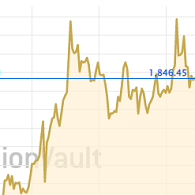
"Over the past 12 months, the price of an ounce
of gold on international
markets has increased from $1947 to $2715, a gain of almost 40 per cent. Interestingly, this march up in
price has been relatively
linear, with any pullback attracting more buyers. It has occurred despite some wild swings in expected
policy rates, a wide
fluctuation band for benchmark US yields, falling inflation and currency volatility.
"What is at stake here
is not just the erosion of the Dollar's dominant role but also a gradual change in the operation of the
global system. No other
currency or payment system is able and willing to displace the Dollar at the core of the system and
there is a practical limit to
reserve diversification. But an increasing number of little pipes are being built to go around this
core; and a growing number of
countries are interested and increasingly involved.
"What has been happening to
the gold price is not just
unusual in terms of traditional economic and financial influences. It also goes beyond strict
geopolitical influences to capture a
broader phenomenon which is building secular momentum.
"As it develops deeper
roots, this risks materially
fragmenting the global system and eroding the international influence of the Dollar and the US financial
system. That would have an
impact on the US's ability to inform and influence outcomes, and undermine its national security. It is
a phenomenon that western
governments should pay more attention to."
There is one crucial caveat to this
diversified and 'value'
approach, however. It requires patience – especially with regard to the 'value' equity
component.
Would you
have sold?
That caveat about requiring patience, though, bears repeating.
Perhaps the best way of expressing
it is via the 1970s performance of Berkshire Hathaway stock – one of the best performing US equity
investments of the last 50 years –
versus the market.
The data below shows you how you would have fared if you'd
put $10,000 into shares of
Berkshire Hathaway and $10,000 into the S&P 500 stock index in 1971. It tells something of a
story.

The figures should
speak for themselves. Warren
Buffett is a multi-billionaire because of this long-term outperformance of the market.
But in 1971, you
didn't know what the future would hold. What you did experience, by holding Berkshire Hathaway until
1975, was losing half of your
money, even while the rest of the market recovered, and 4 years of dismal returns.
Simple question. In the
light of just those four years of data alone, what do you honestly think you would have done? Would you
have sold?
Which is why it's crucial to take the long view. Markets are not entirely efficient, nor
are they entirely
rational.
What matters to us, as shareholders in any company, is how the
company is performing at an
operational level. Is it still making decent profits? Is it still using its cash wisely?
For as long as the
company is operating decently or better, we try not to care too much about the stock price. The company
can control its profits (more
or less) but it can do next to nothing about controlling its stock price. That is almost entirely in the
hands of the mob.
No matter how much money you have and no matter how smart you are, there are only so many
things you can do to protect
your financial future. There is always something that can catch you unawares.
There is also a pervasive sense
among the electorates of the West that they have somehow been cheated by the forces of 'crony
capitalism' – and we share that
resentment. As Jeffrey Tucker writes for the Brownstone Institute:
"The global
Covid response was the turning
point in public trust, economic vitality, citizen health, free speech, literacy, religious and travel
freedom, elite credibility,
demographic longevity, and so much more. Now five years following the initial spread of the virus that
provoked the largest-scale
despotisms of our lives, something else seems to be biting the dust: the postwar neo-liberal consensus
itself."
Peter St Onge, for the same platform, writes:
"Authoritarianism is
back across the West – from
Europe to the Biden-Harris censorship regime that would fit perfectly in Communist China.
"I think many of us
were surprised during Covid to realize just what the supposedly liberal West has become: Essentially the
Soviet Union but with better
uniforms."
The politics of our time have now become hopelessly polarised and
admit, seemingly, to no
compromise on anything. That leaves the very real threat of an ultimately undelivered Brexit and –
almost infinitely worse still – the
threat of unreconstructed Marxist governments across the supposedly developed world.
So the real impact of
the Global Financial Crisis has only just started to be felt at a social level. This is in part what
happens when governments fail to
address major problems in a serious way, the first time around.
In a justly
famous essay, Charles 'Charley'
Ellis, the investment consultant who founded Greenwich Associates, pointed out, citing the work of
scientist Simon Ramo in the
process, that there was not in fact one game of tennis, but two. There was tennis as played by the
professionals, and then tennis as
played by the rest of us.
In the professional game, the player wins points. In
the amateur game, the player
loses points.
Professional tennis players are a dream to watch, as they vault,
dive, lunge and volley. They
rarely make errors.
Amateur tennis players: not so much.
The tennis pro is playing a
winner's game. Victory is down to winning more points than your opponent. The amateur is playing a
loser's game. Victory is achieved,
and not very stylishly, by getting a higher score than your opponent, because he or she loses more
points than you do. Amateur tennis
is a game full of errors.
Ramo even tallied the scores. The verdict: in
professional tennis, about 80 percent
of the points are won. In amateur tennis, roughly 80 percent of the points are lost, i.e. in unforced
errors.
For the amateur tennis player, the best strategy for victory is to avoid mistakes. The best way to avoid
mistakes is to be
conservative and keep the ball in play. Give the other player enough rope to hang himself.
Clearly the
analogy is useful for the private investor versus the alleged professional.
Although human nature doesn't
change, the composition of the financial markets has evidently changed over the past century. Ellis
suggests that during the 1930s and
1940s – a period during which the work of the value investor Benjamin Graham would come to growing
prominence – preservation of
capital and prudent investment approaches would come to dominate. The bull market of the 1950s attracted
new types of aggressive, hot
money investors. The people who were drawn to the Wall Street of the 1960s had always been winners – in
debating teams or in sports
teams. But as the markets sucked in more and more winners and people who urgently wanted to win, the
dynamic of the markets
changed.
In the 10 years prior to Ellis' 1975 essay, institutional investors
went from representing 30
percent of the turnover on Wall Street to 70 percent.
Ellis' advice to anyone
trying to beat the
professionals at their own game?
- Know your investment policies very well and play according to them consistently. Let the other fellow make the mistakes. Let him track the benchmarks – leave your own portfolio entirely unconstrained.
- Keep it simple. In the words of the golfer Tommy Armour, "Play the shot you've got the greatest chance of playing well." Wait for the fat pitch. Do nothing otherwise. This is a luxury the institutional fund manager does not have.
- Focus on defence. In a loser's game, researchers should spend most of their time making sell decisions, not purchases. To put it another way, limit your number of purchases. Better a concentrated portfolio where each of the positions is well understood, than a 'diworsified' portfolio consisting of little or no underlying investment conviction. Data strongly suggest that the optimal number of portfolio holdings is around 16 or so. (Within our fund and within our discretionary portfolios, we target between roughly 15 and 30 holdings.) Many successful investors get by with less than 10. You don't need to own "the market". A focused portfolio of high conviction stocks is something you can hold that most professional investors simply can't.
- Don't take it personally. "Most of the people in the investment business are "winners" who have won all their lives by being bright, articulate, disciplined and willing to work hard. They are so accustomed to succeeding by trying harder and are so used to believing that failure to succeed is the failure's own fault that they may take it personally when they see that the average professionally managed fund cannot keep pace with the market.." You don't have to worry about peer group performance. There's no rush – you just need to shepherd your capital so that you can stay in the game.
Value investing gives you an automatic edge over most market professionals because it's a game very few
of them can even play. They
don't have the luxury of time, and they don't have the flexibility to go off benchmark and invest freely
into the best opportunities.
They are more concerned with keeping their jobs and running with the herd than with maximising
returns.
In
summary, ask yourself two questions: what does it cost? And how much is it worth? Then quietly ask
yourself a third: do I sincerely
want to be rich? And finally ask yourself a fourth: do I sincerely want to stay rich?








 Email
us
Email
us