
Depression Economics
Revisiting the Great Depression with Murray Rothbard...
SOMETIMES, albeit very occasionally, you come across a book that utterly
changes the way you look at
the world, writes Tim Price at Price Value
Partners.
One such book: Murray Rothbard's extraordinarily
thought-provoking "America's Great
Depression" (The Ludwig von Mises Institute, Fifth Edition, 2008).
Rothbard,
who died in January 1995, was
something of a 'Renaissance man': scholar, economist, historian and philosopher. He was also a leading
member of what has come to be
known as the Austrian school of economics – which amongst other things maintains a healthy cynicism
about the value of mathematical
modelling in markets, and which puts a premium on 'sound money' over more speculative and ultimately
dangerous credit
creation.
Not least in its suspicion of the role of banks, it is the perfect
read for our time.
If your schooling was anything like ours, "America's Great Depression" will turn on its
head your opinion of the economic
catastrophe of the 1930s – a period whose echoes resound throughout the global financial crisis that
began in 2007 and which has yet
to be resolved, if the share prices of the major US banks, for example, are any guide.
In essence, the
message we received at school was that Herbert Hoover oversaw a stupendous Crash in the US stock market;
the economy entered a
profound slump; and it was only the interventionist vigour of President Franklin D. Roosevelt which
pulled it back out.
But Rothbard's conclusions are diametrically opposed. President Hoover, by Rothbard's
account, threw all kinds of
government resources at the problem, long before Roosevelt's own alphabet soup of state agencies.
Rothbard's thoughts about the
banking system, in particular, and about the role of government in addressing booms and busts, have
enormous relevance for today's
investment markets.
Rothbard's death in 1995 meant that he was unable to share
with us his views about the
orgy of credit provision and the unrestrained mortgage lending that in large part triggered the global
banking crisis. Let's not even
mention the economic insanity that accompanied Covid, most notoriously lockdowns. But it is unlikely
that he would have approved. And
he had extremely strong opinions about the very nature of fractional reserve banking: the system by
which banks keep a tiny fraction
of their deposits in order to lend out the remainder for profit. As he comments in this masterful
work:
"Banks are "inherently bankrupt" because they issue far more warehouse receipts to cash (nowadays in the
form of "deposits" redeemable
in cash on demand) than they have cash available. Hence, they are always vulnerable to bank runs. These
runs are not like any other
business failures, because they simply consist of depositors claiming their own rightful property, which
the banks do not have.
"Inherent bankruptcy," then, is an essential feature of any fractional reserve banking
system."
Rothbard goes
on to quote Frank D. Graham from "Partial Reserve Money and the 100% Proposal" (American Economic
Review, September 1936):
"The attempt of the banks to realize the inconsistent aims of lending cash, or merely
multiplied claims to cash, and
still to represent that cash is available on demand is even more preposterous than.. eating one's cake
and counting on it for future
consumption.. The alleged convertibility is a delusion dependent upon the right's not being unduly
exercised."
Suffice to say that Rothbard, and members of the Austrian school, hold to the primacy of
gold as a fundamental store of
value that restricts the animal spirits of bankers to indulge in uncontrolled credit
creation.
As Rothbard
sees it, the business cycle is straightforward. Bank credit expansion causes an inflationary boom, which
is marked by an expansion in
the money supply and by what he calls malinvestment, both by bankers and entrepreneurs. The crisis comes
about when credit expansion
halts abruptly and those malinvestments become all too evident. What he then calls the "depression
recovery" starts the necessary
adjustment process "by which the economy returns to the most efficient ways of satisfying consumer
desires."
Note that Rothbard conjoins "depression" and "recovery": they are one and the same thing. You cannot
have economic recovery without a
cleansing depression:
"Wasteful projects.. must either be abandoned or used as
best they can be. Inefficient
firms, buoyed up by the artificial boom, must be liquidated or have their debts scaled down or be turned
over to their creditors.
Prices of producers' goods must fall, particularly in the higher orders of production – this includes
capital goods, lands, and wage
rates.. Not only prices of particular machines must fall, but also the prices of whole aggregates of
capital, e.g. stock market and
real estate values. In fact, these values must fall more than the earnings from the
assets.."
"Liquidate
labour, liquidate stocks, liquidate the farmers, liquidate real estate." This notorious quote from US
Treasury Andrew Mellon after the
Crash once struck us as grotesque, unfeeling, and overly simplistic. Now, having read Rothbard, we are
not so sure. Mellon suggested
that the economic severity of the depression would "purge the rottenness out of the system."
This sounds like
painful medicine, which of course it is. But as the scale of government support for the banking system
in our own time continues to
swell monstrously, one might well ask whether the presumed interventionist cure is worse than the
disease. Rothbard, as a classic free
marketeer, indicates that the economic contraction process causes no positive malinvestments (unlike the
boom that preceded it), so it
will not lead to such a painful period of depression and adjustment. "If businessmen are misled into
thinking that less capital is
available for investment than is really the case, no lasting damage in the form of wasted investments
will ensue."
Where the Rothbard thesis is most striking, however, is in relation to the role of
government. His first and clearest
injunction to return the economy to "normal" prosperity: don't interfere with the market's adjustment
process;
"The more the government intervenes to delay the market's adjustment, the longer and more
gruelling the depression will
be, and the more difficult will be the road to complete recovery. Government hampering aggravates and
perpetuates the depression. Yet,
government depression policy has always (and would have even more today) aggravated the very evils it
has loudly tried to
cure."
Rothbard goes on to list the various ways that government might hamper
this market adjustment process.
Ironically, the list also and exactly constitutes the preferred "anti-depression" measures of government
policy! The list of flawed
palliatives runs as follows:
- Prevent or delay liquidation. Lend money to shaky businesses, call on banks to lend further, etc.
- Inflate further. Further inflation blocks the necessary fall in prices, thus delaying adjustment and prolonging depression.
- Keep wage rates up. Artificial maintenance of wage rates in a depression ensures permanent mass unemployment.
- Keep prices up. Keeping prices above their free market levels will create unsaleable surpluses, and prevent a return to prosperity.
- Stimulate consumption and discourage saving. Any increase in the relative size of government in the economy shifts the societal consumption-investment ratio in favour of consumption, and prolongs the depression.
- Subsidize unemployment. Any subsidisation of unemployment will prolong unemployment indefinitely, and delay the shift of workers to the fields where jobs are available.
What is striking today is how many of these measures are being actively pursued by the governments of
developed economies, not least
our own.
Rothbard concludes his study of the Great Depression by pointing out
just how extensive the Hoover
administration measures were in an ultimately vain attempt to combat the slump.
"For the first time,
laissez-faire was boldly thrown overboard and every governmental weapon thrown into the breach.. By
every "progressive" tenet of our
day, he should have ended his term a conquering hero; instead he left America in utter and complete ruin
– a ruin unprecedented in
length and intensity."
Why did this come about? Rothbard holds, perhaps
controversially, that only
governmental inflation can generate a true boom and bust cycle, and that any depression will be
prolonged and intensified by
inflationist intervention on the part of presumably well-meaning politicians. "America's Great
Depression" showcases Rothbard's firm
belief that President Hoover's aggressive interventionist measures ended up aggravating the economic
slowdown. In his
words,
"The guilt for the Great Depression must, at long last, be lifted from
the shoulders of the
free-market economy, and placed where it properly belongs: at the doors of politicians, bureaucrats and
the mass of "enlightened"
economists. And in any other depression, past or future, the story will be the same."
Governments and their
central banks, in other words, are the primary causes of recessions and depressions – and of wild
inflations. Unsound fiat must
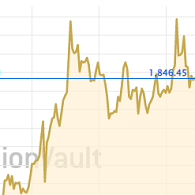
ultimately be replaced by sound money. The prices of gold and silver would now appear to be reaching
exactly the same conclusion.





 Email
us
Email
us