

How the Bond Market Works
Or how it should, amid excess credit, capital shortage...
The AUTHOR and journalist Michael Lewis claims that when he wrote 'Liar's
Poker', which was published
35 years ago, he meant it as a cautionary tale, writes Tim Price of Price Value
Partners.
The book happens to be required reading, not just for anyone seeking an insight into the
ways of Wall Street in the late
1980s, but simply for anyone, full stop.
It's a terrific read, and it charts a
period during which something
approximating to 'gentlemanly capitalism' was taken over, wholesale; first by street-smart traders from
the likes of the Bronx and
London's East End, and then by quantitative analysts (geeks, in other words, but with PhDs).
It also details
a period during which the bond market started to dominate every other facet of the investment world. "I
used to think that if there
was reincarnation," said Clinton political adviser James Carville once, "I wanted to come back as the
president or the pope or as a
.400 baseball hitter.
"But now I want to come back as the bond market. You can
intimidate
everybody."
'Liar's Poker' portrays a world in which cunning slobs stole
dealing rooms from under the noses
of patrician blue-bloods born on the right side of the tracks. If that implies chaos, that's exactly
right.
But cautionary tale? The book became 'must-read' material for an entire generation of undergraduates on
both sides of the Atlantic. It
acted like a giant vacuum cleaner, sucking up mathematicians and philosophy students and economics
third-years and liberal arts
graduates, and spitting them back out across dealing rooms in New York and London's Square
Mile.
For all we
know, it still does. This correspondent speaks as an English graduate whose first job, courtesy of
exposure to 'Liar's Poker', was –
like Michael Lewis – selling bonds for an international investment bank.
The
bond market may be intimidating,
but it shouldn't be. A bond is about the most basic financial instrument you could imagine. Think of a
loan that happens to be
tradable, daily.
That's a bond.
So let's put some more
meat on the bone. Who issues
bonds? Anyone that needs to borrow money. That means governments, corporations, and supranational
borrowers like the World
Bank.
Entities, especially private companies, often prefer to borrow in the
bond market because they don't
want to dilute existing shareholders by means of issuing equity. US companies also often prefer to issue
bonds as opposed to stock
because the interest on bonds is deductible on the company's income tax return. Dividends on stock are
not.
The bond market is an almost entirely institutional market. Private investors barely feature – not least
because the average traded
size for a bond deal in the secondary market is approximately $5 million or so.
How do bonds get issued? In a
way that's very similar to equity underwriting. A consortium of investment banks will gauge the market's
level of interest in the
issue by speaking to their clients – large pension funds, insurers, hedge funds, and sovereign wealth
funds. When they've assessed the
market's demand for the issue, the size of the borrowing will be agreed, and its price, and then the
bonds will be free to trade.
Voila.
Bond math is pretty straightforward, too. Let's take a real world
example. (Market professionals can
skip the next few paragraphs.)
A corporate issuer – let's call them 'General
Industrial' – decides to borrow
$5 billion in the bond market at an interest rate of 5%, maturing in 10 years' time, on 3rd June 2034.
Let's say you're a pension fund
and you decide to buy $1 million worth of the issue at launch. You will pay 100% of the bond's face
value, or what's known as par. So
the stream of cash flows looks as follows:
Launch date: you pay General
Industrial (or more specifically, the
investment bank from whom you bought the bond) $1000,000.
3rd June 2025:
General Industrial pays you $50,000
(5% of your $1000,000).
3rd June 2026: General Industrial pays you another
$50,000.
3rd June 2027: General
Industrial pays you another $50,000...(you get the picture).
...and on 3rd June
2034, General Industrial pays
you a last coupon payment of $50,000 – and it also pays you your original principal of $1000,000
back.
As you
can see from this example, bond interest payments, or what are called coupons, are typically fixed. And
the redemption of your initial
capital is fixed, too, at 100%.
This means that in a high inflation
environment, bonds are generally poor
investments. The converse is also true. In a deflationary environment, where prices are actually
falling, bonds are generally great
investments, because the purchasing power of your capital is actually improving, relative to those
falling prices.
It's important to know that you're not locked in to holding this bond until it matures in
June 2034. You can sell it any
time you like. Although the coupon is only paid once a year (bonds typically pay annual or semi-annual
coupons), if you decide to sell
it before the coupon date, you'll be compensated for any accrued interest that you've earned but not
been paid.
And it's also critically important to know that if General Industrial is unable to pay the
interest it owes you, or to
repay the initial capital when the bond matures, you may lose everything.
For
this reason, almost all bonds
carry a credit rating from a major ratings agency like Moody's or Standard & Poor's. Credit ratings
range from 'AAA' (impeccable)
all the way down to 'D' – meaning the company is in default. 'Investment grade ratings' (the best sort)
range from 'AAA' to 'BBB-'.
Anything below that is considered 'junk', or more politely, 'high yield'.
So
what influences the price of
bonds? The major factors are: the likely direction of future interest rates; the likely direction of
inflation; supply and demand for
the bonds in question; and the perceived credit quality of the issuer.
One
final word on bond math. There is
one thing close to an iron law in economics. If interest rates go up, bond prices typically fall. (The
converse is also
true.)
Why? Remember, those interest payments, or coupons, are typically fixed.
The capital amount returned
when the bond matures is also fixed, too. So if interest rates rise while you're holding the bond, the
value of those fixed payments
essentially is diminished in real terms. But because the bond trades every day, bond traders can adjust
the price of the bond, which
in turn will adjust the yield that the bond offers.
If you buy that General
Industrial bond at a price of 100
when it's issued, because the coupon is fixed at 5%, your yield will be 5%, too. Over its life, if the
price falls below 100, your
yield (what bond traders call 'yield to maturity') will rise. And clearly, if investors raise their
opinion of General Industrial's
credit quality, then the price of the bonds is likely to rise too. But the critical point is the one we
just made:
If interest rates go up, bond prices typically fall.
Before we
leave the subject of bonds
altogether, it's also worth saying a few words about the nature of bond fund managers. Institutional
bond funds typically invest on an
indexed or benchmarked basis. That is to say, they will tend to own bonds in line with the make-up of an
accredited bond index, such
as the JP Morgan Government Bond Index.
Think about that one more time. A bond
fund tracking a bond index is
effectively obliged to have its largest positions in the largest bond markets. This is a bit like saying
you can lend to one of two
friends. One of your friends wants to borrow $10, and is good for the loan. The other wants to borrow
$1000,000 – and is frankly
unlikely to pay it back. You are obliged to make the loan to your second friend, who's clearly a credit
risk. Welcome to the perverse
and dangerous logic of international bond investing. We think this will end in tears.
A modern economy is
clearly a complex structure, so rather than have to get a PhD in advanced economics just to conduct
credit research on any given
government bond market, most investors leave the credit analysis to the likes of those ratings agencies,
Moody's, Standard &
Poor's, and Fitch IBCA.
But at the risk of appearing overly deferential to
those same agencies, the subprime
mortgage disaster showed that they can have feet of clay. Collateralised debt obligations (packages of
subprime loans) were rated
'AAA' one day and defaulted the next.
So for the avoidance of any doubt, take
credit ratings with more than a
pinch of salt. Remember that credit ratings agencies are paid by the same borrowers for whom they
provide credit ratings – a larger
conflict of interest would be difficult to imagine.
If you're in need of a
further jolt of realism, visit the
US debt clock. The site confirms that the US national debt now stands at just under $35 trillion. With a
't'. That equates to debt per
taxpayer of roughly $267,000. That's the good news. When you factor in the unfunded liabilities of the
US government (the likes of
Social Security and Medicare), the US debt comes to well over $200 trillion. Also with a
't'.
We humbly
submit that these debts will not be paid back. They cannot be paid back. The US national debt is like a
neutron star: an incalculably
dense mass that crushes everything that comes towards it.
But ratings agency
Fitch cheerfully gives the US a
credit rating of 'AA+', its second highest rating. Ominously, though, it downgraded the US from its
highest rating of 'AAA' in August
2023.
With hindsight it made absolute sense to buy US Treasuries in the early
1980s, for example. The oil
shocks of the 1970s had given rise to years of stagflation and it was only Fed chairman Paul Volcker's
determination to squeeze
inflation out of the system through the tough love of higher interest rates that brought bond markets
back under control.
And how. Starting in 1982, Treasury yields started to drop (bond yields move inversely to
bond prices – so lower yields
means a bond market rally), and they fell precipitously.
By mid-2020, 10 year
US Treasury yields were trading
below 1%. But that was then.. They are now back above 4% – and we think they are heading higher. The
market consensus does not agree
with us.
But there's worse news to come. Treasury yields are only as low as
they are due to the Federal
Reserve's policy of Quantitative Easing (QE). QE was "designed" as a means of boosting the economy
through the provision of additional
liquidity into the banking system. The Fed would create 'ex nihilo' money – money out of thin air – and
use it to buy bonds in the
secondary market from the banks. Gifted free cash through these bond sales, the banks would then lend
out this newly created cash to
those who wanted to borrow. That was the theory.
In practice, all that's really
happened is that QE has
blessed a small proportion of the population – those lucky individuals fortunate or successful enough to
hold large amounts of
financial assets. QE has been an extraordinary boon to the asset rich. Equity prices, bond prices,
housing prices have all benefited
from a colossal leakage of money from the banking system into the financial markets. But this leakage
has now been officially
ended.
This doesn't mean that interest rates are immediately going to rise. But
the formal cessation of the
latest round of QE is equivalent to a sea change in US monetary policy. At some point, interest rates
must rise. And to repeat, if
interest rates go up, bond prices tend to fall.
And because the West is
drowning in bonds, the impact of a
bear market in bonds is incalculable.
If you accept our argument that the
investment world is beset by a type
of uncertainty genuinely never seen before – one that incorporates interest rate risk, default risk and
currency risk on a literally
global scale – then it makes sense to hold a type of asset that is either unexposed to those risks or
that offers the potential to
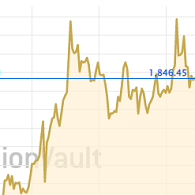
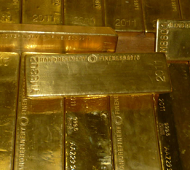
insure your portfolio against them. That asset is gold.
"We have an abundance
of money and credit..." writes
our friend Tony Deden, a money manager in Zurich,
"...but a shortage of
capital. We have sought to substitute
form over substance, credit over savings, and consumption over production. We have eaten our
capital...we live in dismal times and we
suffer from a moral crisis, both being consequences of a [50-year old] experiment in dishonest
money.
"In the
end, the consequences of monetary folly have not been addressed but only postponed. The errors have not
been cleared but merely
covered up with money and false accounting. Money printing can buy time but not wealth. All roads lead
to default and impoverishment
of some sort. The only question that remains is what road will be taken."
The
beauty of gold versus all other
types of asset is that it is the only one that is also no-one else's liability. It is independent,
scarce, and permanent. That cannot
be said of any fiat currency. As you might expect, we regard gold not just as an industrial commodity,
but as an alternative form of
money.
One of Tony's directors once made a highly pertinent observation about
what gold actually
is:
"Gold is not an investment. It is a conscious decision to refrain from
investing until an honest monetary
regime makes the rational calculation of relative asset prices possible."
Suffice to say, the return of an
honest monetary regime may be some time off. But precisely because we don't know what the future holds,
and because the threats to our
purchasing power are numerous and very real, we maintain that gold has a place in any balanced portfolio
today.
Incrementum AG:
"One of our central theses of recent years is now
being slowly but surely
confirmed: (Government) bonds are no longer the antifragile portfolio foundation they have been for the
last 40 years. After yields
reached a microscopically low level in 2020 and were even negative in some cases, 10-year US Treasuries
fell in value by 22.8%, while
30-year bonds even fell by 48.8% from their peak. The frontrunners in the negative sense are naturally
the 100-year Austrian bonds,
which are down 69.1 % (maturity 2120) from their respective highs.
"It almost
seems as if the bond vigilantes
are back. Coined by Ed Yardeni in 1983, the term refers to activist investors who indirectly control
government policy by buying and
selling government bonds. These "financial sheriffs" send a clear signal against excessive government
debt and inflation by driving up
interest rates through the sale of bonds. Today, in a time of financial repression and open central bank
interventionism, their role
may seem weakened. But the bond vigilantes are not obsolete – they are adapting to the new market
realities and remain an important
corrective to fiscal slippage.
"A historical example of the impact of bond
vigilantes was the bond market
reaction to the overexpansive fiscal policy of the Reagan era in the early 1980s. Higher deficits led to
a rise in government bond
yields, which ultimately prompted the government to tighten its budget policy. Another example is the
European sovereign debt crisis
in the early 2010s, when investors questioned the creditworthiness of southern European countries and
drastically increased the
interest burden for these countries by selling PIIGS bonds.
"And the playbook
is likely to have changed not
only for gold but also for bonds. Recently, US government bonds have increasingly exhibited
characteristics of traditional risk-on
investments. In times of financial unrest, their yields rose – a clear contrast to the previous trading
pattern that dominated for
decades. This new behaviour is reminiscent of the performance of emerging-market government bonds, which
are traditionally more
sensitive to global risk sentiment. This transformation marks a significant departure from the previous
role of [US Treasuries] as a
safe haven, and it requires a rethink in strategic allocation."
In common with
Incrementum, we think much has
changed. Although anecdotal evidence suggests that our wealth management competitors still see merit in
the so-called '60/40
portfolio' (60% equities; 40% bonds; both benchmarked against traditional market weight indices), we see
none whatsoever. We see no
merit in fiat currencies or bonds issued by heavily indebted sovereigns that have no realistic way out
of their current debt
predicament other than via an explicit and highly repressive policy of state-sanctioned inflationism.
Conversely, we see huge merit in
the stateless, creditless, apolitical opportunities represented by the likes of gold and silver and
sensibly priced commodities
companies – and we are invested accordingly.






 Email
us
Email
us